

How Everyday Eating Habits Quietly Shape Your Oral Health
When people think about dental health, brushing and flossing usually come first. Food often comes later—if at all. Yet, what we eat daily has a continuous and subtle effect on our teeth and gums, sometimes even more than we realise.
The mouth is a living environment. Teeth are exposed to acids, bacteria, and pressure throughout the day, while gums respond to inflammation, nutrition, and healing capacity. Food influences all of this.
This guide explores how certain foods support healthy teeth and gums, explained in a simple, practical way—without trends, gimmicks, or extremes.
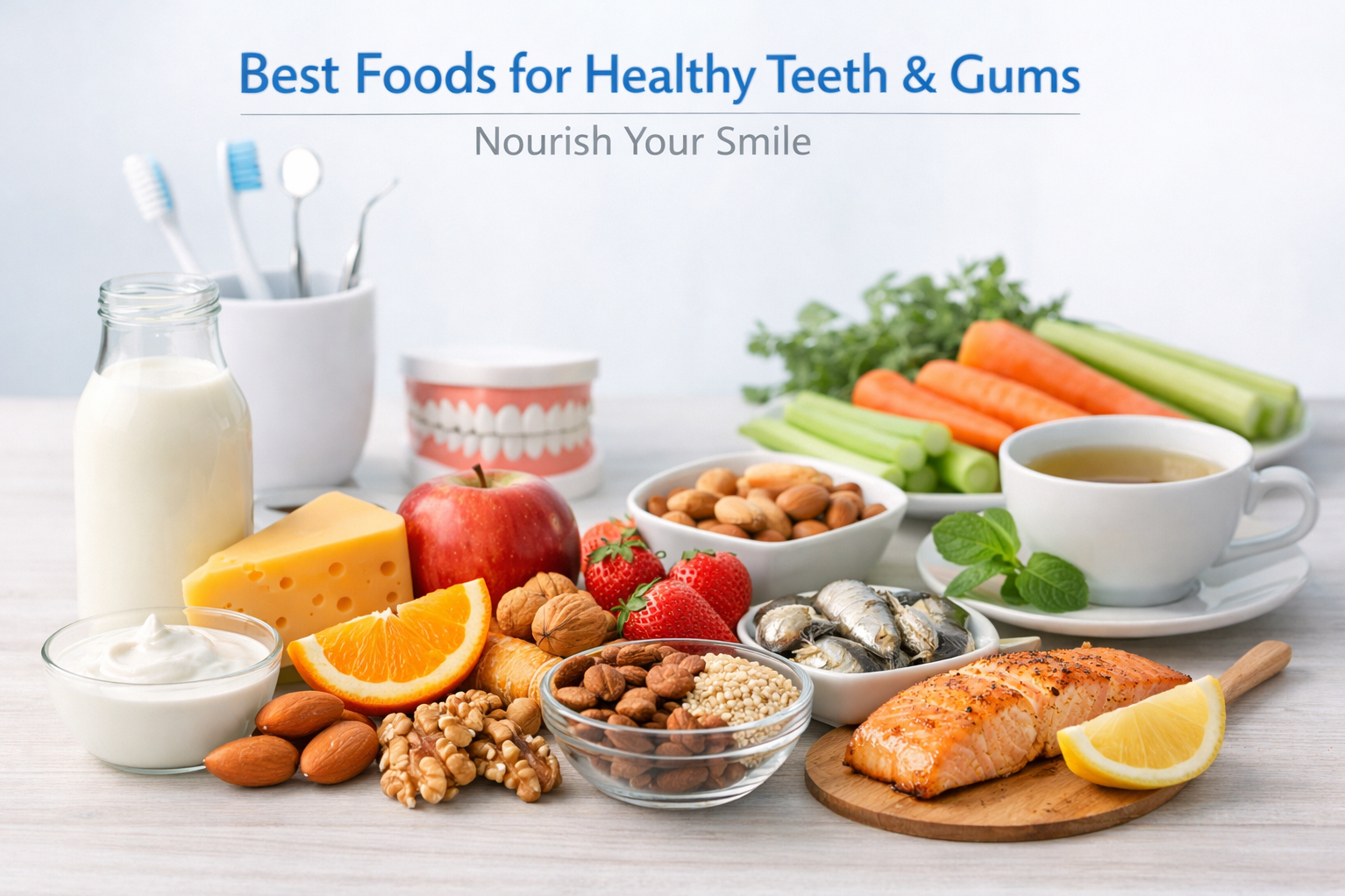
1. Crunchy Fruits and Vegetables: Gentle, Natural Cleansing
Crunchy fruits and vegetables do more than provide vitamins.
How they help:
- Stimulate saliva production
- Gently clean tooth surfaces while chewing
- Improve blood flow to the gums through mild mechanical stimulation
Examples include:
- Apples
- Carrots
- Celery
- Cucumber
Saliva plays a major protective role in the mouth. It helps neutralise acids, wash away food particles, and support enamel repair. Foods that increase saliva indirectly support cavity prevention.
2. Calcium-Rich Foods: Supporting Enamel and Jawbone Health
Teeth depend on minerals for long-term strength. Calcium is one of the most important.
Why calcium matters:
- Maintains enamel hardness
- Supports the jawbone that holds teeth in place
- Helps reduce long-term sensitivity
Common sources:
- Milk
- Cheese
- Plain curd or yogurt
Cheese, in particular, helps balance acidity in the mouth after meals, creating a more enamel-friendly environment.
3. Vitamin C–Rich Foods: For Gum Strength and Stability
Gums are soft tissues that depend on adequate nutrition to remain firm and healthy.
Vitamin C supports:
- Collagen production in gum tissue
- Resistance to inflammation
- Faster healing of minor gum injuries
Good sources include:
- Oranges
- Guava
- Strawberries
- Bell peppers
Citrus fruits are healthy, but because they are acidic, it helps to rinse the mouth with water afterward to protect enamel.
4. Nuts and Seeds: Small Additions with Long-Term Benefits
Nuts and seeds provide minerals that teeth and gums need in small but steady amounts.
Their role:
- Supply calcium, phosphorus, and magnesium
- Support enamel remineralisation
- Contribute to gum tissue repair
Useful options:
- Almonds
- Walnuts
- Sesame seeds
- Flaxseeds
They are best consumed plain, without added sugar or coating.
5. Fatty Fish: Reducing Gum Inflammation from Within
Gum health is closely linked to inflammation levels in the body.
Fatty fish contains:
- Omega-3 fatty acids, which help reduce inflammation
- Vitamin D, which improves calcium absorption
Examples:
- Salmon
- Sardines
- Mackerel
Adequate vitamin D levels are associated with better gum health and improved healing after dental procedures.
6. Unsweetened Tea: Quiet Support Against Harmful Bacteria
Green and black tea contain natural compounds called polyphenols.
These compounds:
- Limit the growth of harmful oral bacteria
- Reduce plaque formation
- Support overall gum health
Tea is most beneficial when consumed plain, without added sugar or syrups.
7. Water: The Most Overlooked Contributor to Oral Health
Water supports oral health quietly but consistently.
It helps by:
- Washing away food debris
- Preventing dry mouth
- Supporting steady saliva flow
Drinking water after meals is one of the simplest habits that benefits both teeth and gums.
Foods That Can Strain Teeth and Gums When Consumed Often
It’s not about complete avoidance, but frequency matters.
Foods that require moderation:
- Sugary snacks and beverages
- Sticky sweets
- Frequent refined carbohydrate snacking
- Acidic drinks without rinsing afterward
Repeated exposure keeps the mouth acidic for longer periods, increasing enamel wear and gum irritation.
A Practical Way to Think About Daily Meals
A tooth- and gum-friendly meal often includes:
- Something crunchy
- A source of calcium
- A vitamin-rich fruit or vegetable
- Water
This simple balance supports the mouth’s natural defence systems throughout the day.
Final Thought
Oral health is not built only at the sink with a toothbrush. It develops gradually, influenced by daily habits—including what we eat.
Food does not replace dental care, but it strongly supports it. Over time, thoughtful eating choices can help maintain stronger teeth, healthier gums, and a more stable oral environment.
Small, consistent choices matter more than perfection.