

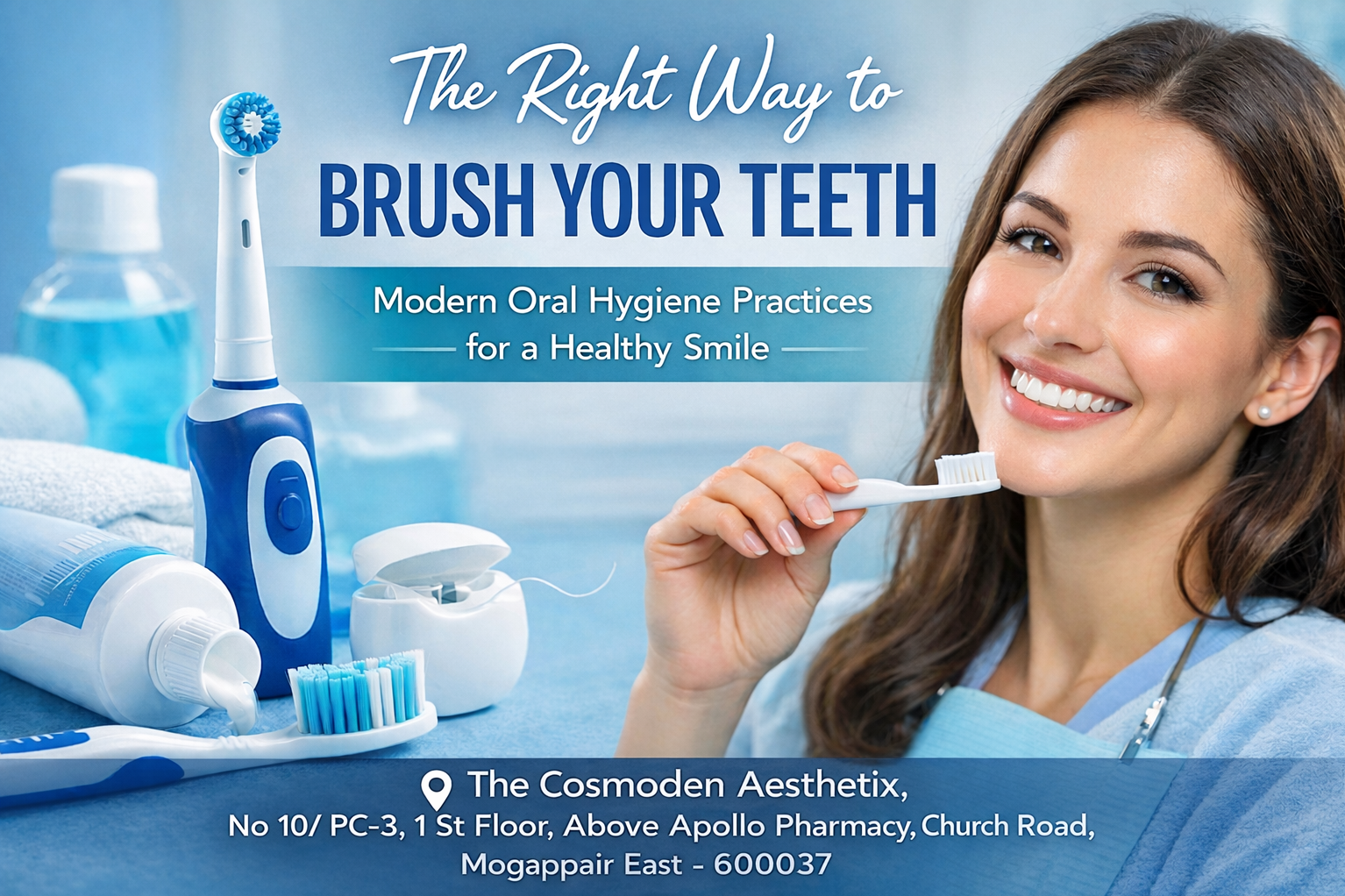
The Right Way to Brush Your Teeth: Modern Oral Hygiene Practices for a Healthy Smile
A beautiful smile begins with simple, everyday habits. Yet, despite brushing twice a day, many people continue to struggle with cavities, gum disease, bad breath, and sensitivity. Why? Because oral health isn’t just about frequency — it’s about technique, consistency, and the right care routine.
At Cosmoden Aesthetix, Chennai, we believe preventive dentistry is the foundation of lifelong oral wellness. In this guide, we’ll walk you through the correct way to brush teeth and introduce modern oral hygiene practices that truly protect your smile.
Why Proper Oral Hygiene Truly Matters
Oral hygiene is more than a cosmetic concern — it’s a health priority.
Poor oral care can lead to:
- Tooth decay and cavities
- Bleeding gums and gum disease
- Persistent bad breath
- Tooth sensitivity
- Premature tooth loss
What many don’t realize is that oral health is closely linked to overall health. Research shows connections between poor oral hygiene and conditions like heart disease and diabetes.
At The Cosmoden Aesthetix, we often see patients who brush regularly but unknowingly use the wrong technique or skip essential steps like flossing or tongue cleaning.
How Often Should You Brush Your Teeth?
A very common question: How often should you brush your teeth?
Dentist-recommended routine:
- Twice daily — once in the morning and once before bedtime
- If brushing after meals, wait at least 30 minutes, especially after acidic foods or beverages
Night-time brushing is particularly important, as it removes plaque and bacteria accumulated throughout the day and protects your teeth while you sleep.
The Correct Way to Brush Your Teeth (Dentist-Approved)
Using the proper brushing technique makes all the difference.
Follow these gentle, effective steps:
- Choose a soft-bristled toothbrush
- Hold it at a 45-degree angle to your gums
- Use slow, circular motions — never harsh scrubbing
- Brush all surfaces: front, back, and chewing areas
- Gently clean along the gumline
- Brush your tongue to remove odor-causing bacteria
- Brush for a full two minutes
Avoid brushing too hard. Aggressive brushing can wear down enamel and cause gum recession, leading to sensitivity and long-term damage.
Manual vs Electric Toothbrush: Which Is Better?
One of today’s most commonly asked question is manual vs electric toothbrush.
Manual Toothbrush:
- Affordable and widely available
- Effective when used correctly
Electric Toothbrush:
- Removes plaque more efficiently
- Ideal for children, elderly individuals, and people with limited hand mobility
- Helpful for patients with braces or gum disease
If you struggle with plaque buildup or brushing consistency, an electric toothbrush can be a worthwhile upgrade.
Choosing the Right Toothpaste
Selecting the best toothpaste for cavities or sensitivity depends on your individual needs.
Toothpaste options:
- Fluoride toothpaste: Strengthens enamel and prevents decay
- Toothpaste for sensitive teeth: Reduces discomfort
- Herbal toothpaste: Gentle option for mild gum concerns
- Toothpaste for gum health: Helps reduce bleeding gums
At The Cosmoden Aesthetix, we recommend fluoride toothpaste for most patients unless your dentist advises otherwise.
Modern Oral Hygiene Practices Beyond Brushing
True oral care goes beyond just brushing.
1. Flossing
Flossing removes plaque and food particles from between teeth — areas your toothbrush can’t reach.
Floss or use interdental brushes once daily.
2. Mouthwash
An alcohol-free mouthwash helps control bacteria and freshen breath.
Use it once daily, preferably at night.
3. Tongue Cleaning
The tongue holds bacteria responsible for bad breath.
Use a tongue cleaner every day.
4. Interdental Brushes
Especially helpful for people with braces, implants, or wider spaces between teeth.
These essential oral hygiene practices dramatically reduce your risk of gum disease and cavities.
Oral Hygiene Tips for Every Age
For Children:
- Use a pea-sized amount of fluoride toothpaste
- Supervise brushing until age 7
- Begin flossing once teeth touch
For Adults:
- Brush twice daily
- Floss once daily
- Replace your toothbrush every 3 months
For Elderly:
- Use soft-bristled brushes
- Consider electric toothbrushes
- Address dry mouth early
During Pregnancy:
Hormonal changes can increase gum sensitivity and inflammation.
Maintaining strict oral hygiene and scheduling regular dental check-ups is essential.
Signs Your Oral Hygiene Needs Attention
If you notice any of the following, it’s time to seek professional advice:
- Bleeding gums
- Persistent bad breath
- Tooth sensitivity
- Visible plaque buildup
- Gum recession
Early care can prevent minor issues from becoming serious dental problems.
How Professional Dental Cleaning Complements Home Care
Even the most diligent brushing routine can’t remove hardened plaque (tartar).
Professional teeth cleaning includes:
- Gentle scaling and polishing
- Gum health assessment
- Early detection of cavities and gum disease
How often should you get dental cleaning?
Every 6 months for most people.
At Cosmoden Aesthetix, Chennai, we offer advanced, patient-friendly dental cleaning that preserves your comfort while delivering visible results.
Patient FAQ – Brushing & Oral Hygiene
1. How long should I brush my teeth?
You should brush for a full two minutes twice a day. Most people brush for less than a minute, which isn’t enough to remove plaque effectively.
2. Is brushing harder better for cleaning teeth?
No. Brushing too hard can damage your enamel and cause gum recession. Always use gentle, circular motions with a soft-bristled toothbrush.
3. How often should I change my toothbrush?
Replace your toothbrush every 3 months, or sooner if the bristles are frayed or after a recent illness.
4. Is an electric toothbrush really better than a manual one?
Both work well if used correctly, but electric toothbrushes remove plaque more efficiently and are ideal for people with braces, gum disease, or limited hand movement.
5. Do I really need to floss if I brush well?
Yes. Flossing cleans between teeth where toothbrushes can’t reach. Daily flossing significantly reduces cavities and gum disease.
6. When should I use mouthwash?
Use an alcohol-free mouthwash once daily, preferably at night, after brushing and flossing.
7. How often should I get professional teeth cleaning?
Most people should get professional teeth cleaning every 6 months. Patients with gum disease may need more frequent visits.
8. Why do my gums bleed while brushing?
Bleeding gums are often a sign of gum inflammation caused by plaque buildup. Improving your oral hygiene routine and scheduling a dental check-up can help.
9. Is tongue cleaning really necessary?
Yes. Tongue cleaning removes bacteria that cause bad breath and improves overall oral hygiene.
10. Can children use fluoride toothpaste?
Yes, in small amounts. A pea-sized quantity is recommended for children above 3 years, under adult supervision.
Conclusion: Small Habits, Lifelong Smiles
Oral hygiene isn’t complicated — it’s consistent.
By following the correct way to brush teeth, flossing daily, cleaning your tongue, and scheduling routine dental visits, you can protect your smile for life.
At The Cosmoden Aesthetix, our mission is not only to treat dental issues but to empower you with personalized guidance for lasting oral health.
Why Patients Choose Cosmoden Aesthetix, Chennai
- Expert-led dental care
- Modern technology
- Gentle, patient-first approach
- Personalized oral hygiene guidance
- Comprehensive dental services
Visit us at
📍 The Cosmoden Aesthetix, No 10/PC-3, 1 st floor, above Apollo pharmacy, church road, Mogappair East
📞 Call / WhatsApp: 7200036771