

Losing one tooth may not feel urgent at first. Many patients say,
“It’s just one tooth—I can manage for now.”
But over time, that small gap begins to matter. Chewing feels uneven, food gets trapped more often, and the jawbone beneath the missing tooth slowly starts to weaken—usually without any warning signs.
When patients come in asking about replacing a single missing tooth, the conversation almost always comes down to two options:
- FPD (Fixed Partial Denture / Dental Bridge)
- Single Tooth Dental Implant
Both are established treatments. The real question isn’t which is better, but which is better for you.
Understanding the Two Options in Simple Terms
What Is an FPD (Fixed Partial Denture)?
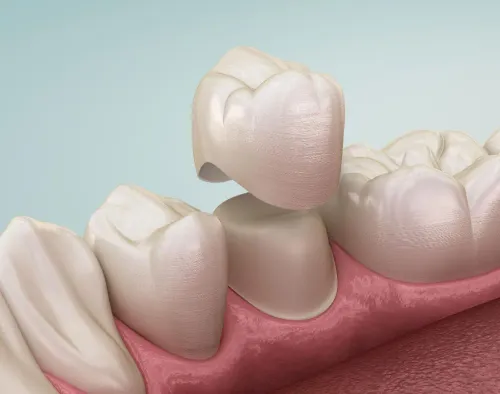
An FPD, commonly known as a dental bridge, replaces a missing tooth by using the teeth on either side for support.
To place a bridge:
- The adjacent teeth are trimmed
- Crowns are placed on them
- A false tooth fills the space in between
This method has been used successfully for many years and still has a place in modern dentistry—when chosen for the right reasons.
What Is a Single Tooth Implant?
A single tooth implant replaces the missing tooth along with its root.
A titanium implant is placed into the jawbone, where it integrates with the bone (a process called osseointegration). Once healing is complete, a crown is placed on top, resulting in a tooth that closely mimics a natural one in function and appearance.
The Difference Patients Rarely Hear About
Most online comparisons focus on time and cost.
But the most important difference lies beneath the gums.
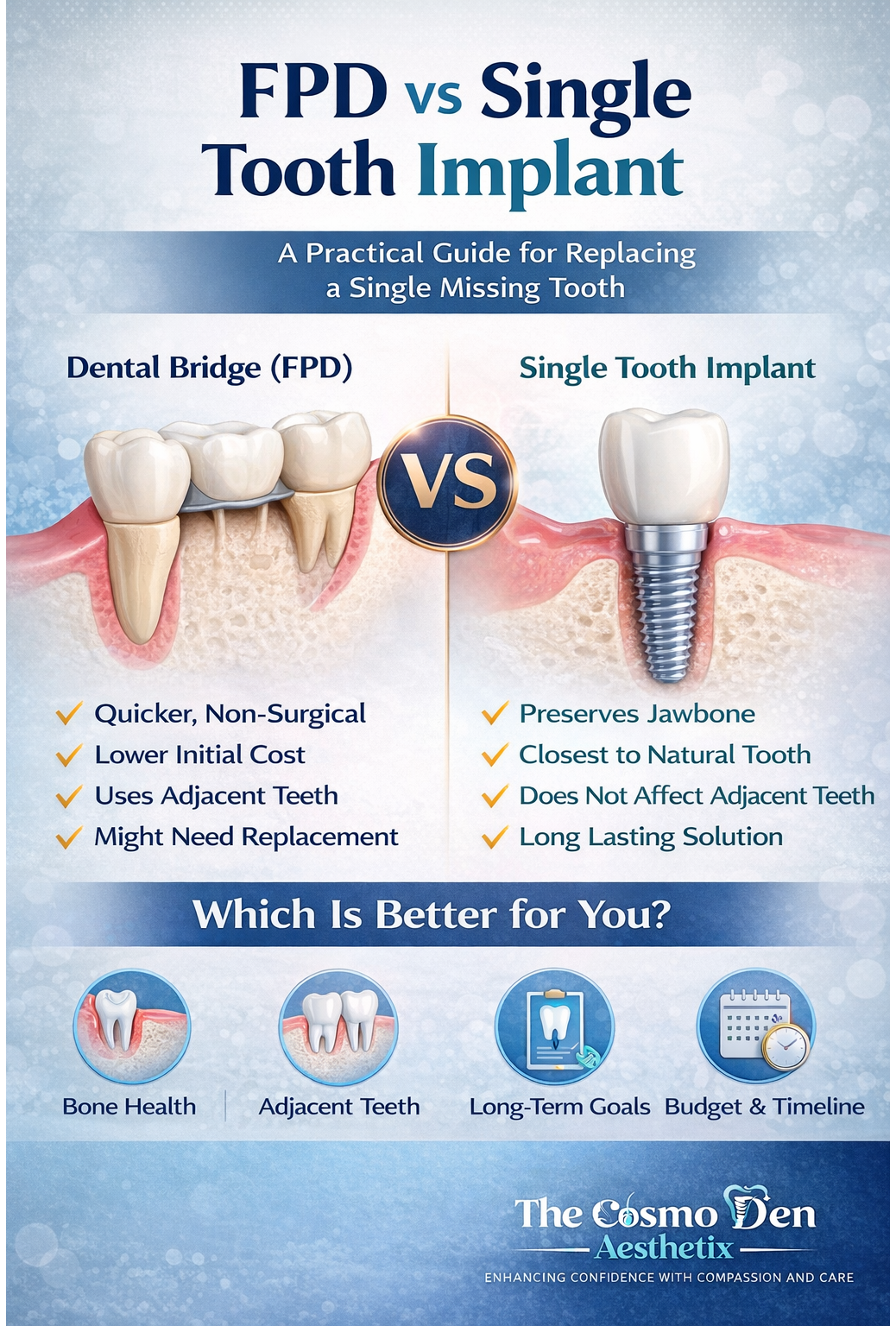
With a Dental Bridge (FPD):
- The gap is filled ✔
- Adjacent teeth must be cut ❌
- Bone under the missing tooth continues to shrink ❌
With a Single Tooth Implant:
- The tooth and root are replaced ✔
- Adjacent teeth remain untouched ✔
- Jawbone stays healthy and supported ✔
Bone loss happens slowly and silently—but it affects long-term oral health and facial structure.
FPD vs Single Tooth Implant: A Practical Comparison
Factor Fixed Partial Denture (FPD) Single Tooth Implant
Adjacent teeth involved Yes No
Bone preservation No Yes
Surgical procedure No Minor
Treatment duration Short Longer (healing phase)
Longevity Moderate Long-term
Oral hygiene Slightly difficult Similar to natural tooth
Natural feel Good Excellent
When an FPD May Be the Right Choice
An FPD dental bridge can be a sensible option if:
- The neighbouring teeth already require crowns
- Bone quality is not suitable for an implant
- A quicker, non-surgical solution is preferred
- Budget considerations are important
In such situations, careful planning makes all the difference.
When a Single Tooth Implant Is Often Preferred
A single tooth dental implant is usually recommended when:
- Adjacent teeth are healthy
- Long-term durability matters
- Preserving bone and facial balance is a priority
- You want a solution that feels closest to a natural tooth
- You prefer not to compromise surrounding teeth
Many patients later describe implants as a solution they stop thinking about—because it simply feels normal.
A Note on Cost (An Honest Perspective)
The cost of a single tooth implant is higher initially, but it often proves more economical over time due to:
- Longer lifespan
- Lower chances of repeat treatment
- Protection of adjacent teeth
- Prevention of bone loss
A bridge may appear economical at first but can lead to additional treatments in the future.
Why Personal Evaluation Matters
There is no universal answer to FPD vs single tooth implant.
The right option depends on:
- Bone quality and volume
- Gum health
- Bite forces
- Condition of neighbouring teeth
- Overall medical history
- Your expectations and lifestyle
This is why, at Cosmoden Aesthetix, the focus is always on individual assessment rather than one-size-fits-all recommendations. Two patients missing the same tooth may still need very different solutions.
A Gentle but Important Thought
Replacing a missing tooth isn’t cosmetic dentistry—it’s preventive care.
Making the right decision early helps protect your bite, bone health, and overall oral balance for years to come.
Final Thoughts
If you’re choosing between a dental bridge and a single tooth implant, take a moment to think beyond the immediate fix.
Ask yourself:
“Which option will support my oral health five, ten, or twenty years from now?”
With proper evaluation and honest guidance, the right answer usually becomes clear.
Frequently asked Questions:
1.Which is better: dental bridge or implant?
It depends on bone health, adjacent teeth, and long-term goals.
2.How long does a single tooth implant last?
With good care, implants can last lifetime .
3.Does an FPD cause bone loss?
Yes, because it does not replace the tooth root.
4.Is implant surgery painful?
Most patients report minimal discomfort, often less than expected.
Book your consultation now !
📍The Cosmoden Aesthetix, No.10/PC-3, 1 st floor, Church road, Mogappair East-600037
☎️ Call or WhatsApp -7200036771