
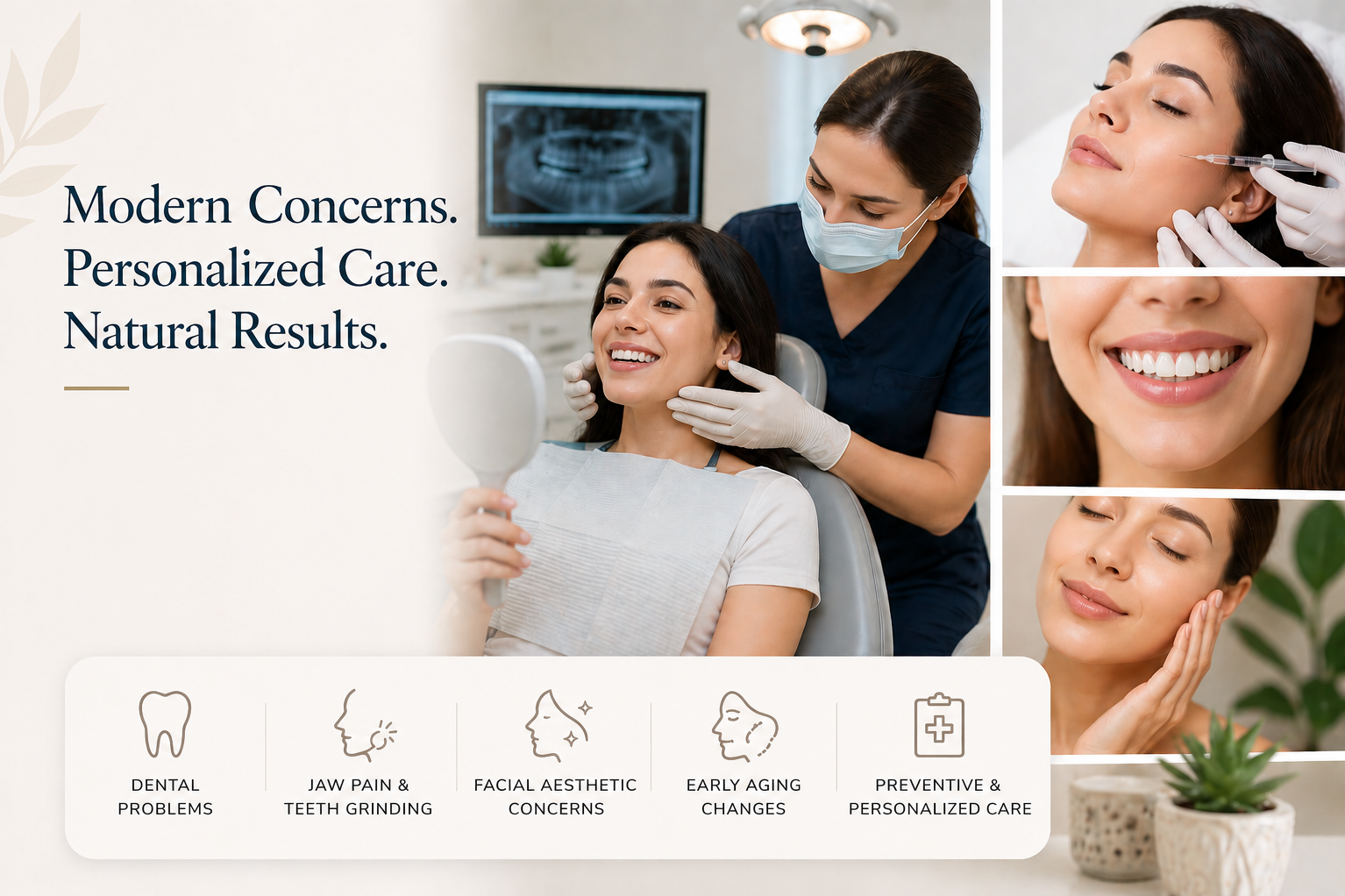
Explore the most common real-life concerns seen in modern aesthetic and dental clinics today — from jaw pain and teeth grinding to facial ageing, smile aesthetics, stress-related facial problems, and preventive aesthetic treatments.
Modern dental and aesthetic clinics are seeing a noticeable shift in the kind of concerns patients present with today. Unlike a decade ago, patients are no longer visiting clinics only for toothaches, cavities, or major cosmetic corrections. The newer generation of patients is far more aware of facial appearance, smile aesthetics, skin quality, ageing changes, and overall facial harmony.
At the same time, lifestyle-related problems are increasing rapidly. Stress, poor sleep, long screen hours, irregular food habits, and social media influence are changing both patient expectations and clinical presentations.
What makes modern practice interesting is that many conditions we commonly see today are interconnected. Dental health, facial muscles, jaw function, skin quality, ageing patterns, and emotional stress often influence each other more than patients realize.
The Rise of Stress-Related Facial Problems
One of the most common patterns we now observe is stress manifesting physically in the face and jaw.
Many patients visit with complaints such as:
- Jaw pain near the ear
- Frequent headaches
- Facial tightness
- Teeth grinding
- Jaw clicking
- Neck stiffness
- Facial asymmetry
- Tired facial appearance
Interestingly, most patients initially believe these are unrelated problems.
A Common Clinical Scenario
A 32-year-old corporate professional recently visited with concerns about headaches, facial fatigue, and pain while chewing. She had already consulted multiple specialists assuming it was sinus-related or neurological.
During examination, excessive jaw muscle tension and signs of severe night-time teeth grinding were observed. Long work hours, chronic stress, poor sleep, and prolonged laptop use appeared to be contributing factors.
After conservative jaw therapy, bite protection, and stress-related habit correction, her symptoms improved gradually.
Cases like these have become increasingly common in younger working adults.
Patients Are Becoming More Aesthetically Aware
Another major shift is the growing awareness of facial aesthetics.
Patients today are more conscious about:
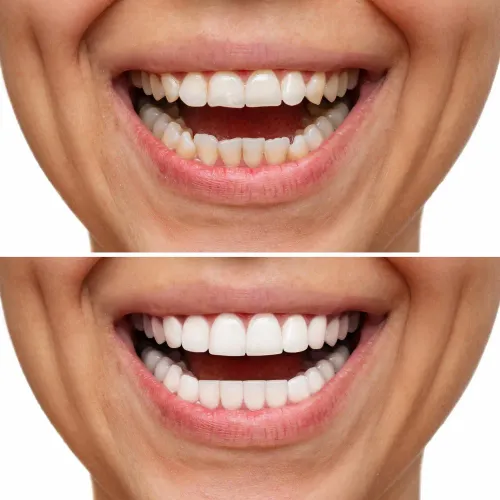
- Smile appearance
- Jawline definition
- Skin texture
- Facial symmetry
- Lip balance
- Gummy smiles
- Under-eye hollowness
- Early ageing signs
Social media, high-definition photography, and video-based communication have significantly increased self-awareness regarding facial appearance.
A Real-Life Aesthetic Concern
A young entrepreneur in his late 20s visited not because of pain, but because he felt his face looked “constantly tired” in photographs and video calls.
On evaluation, mild volume loss under the eyes, poor sleep patterns, dehydration, and chronic stress were contributing to his appearance.
Rather than aggressive treatment, a combination of skin quality improvement, hydration-focused therapies, lifestyle modification, and minimally invasive aesthetic procedures helped achieve a fresher and more natural look.
Modern patients increasingly prefer subtle, natural-looking improvements rather than exaggerated cosmetic changes.
Teeth Grinding Is More Common Than Most Patients Realize
Bruxism, or teeth grinding, is something we frequently diagnose today.
Many patients are unaware they clench or grind their teeth during sleep until:
- Teeth become worn down
- Jaw pain develops
- Headaches increase
- Teeth sensitivity appears
- Facial muscles enlarge
In some patients, overactive jaw muscles can even alter lower face proportions and facial balance over time.
A Frequently Seen Scenario
A fitness-conscious young man visited with complaints of jaw tightness and facial heaviness. He initially thought his jaw muscles had become “stronger” from workouts.
Clinical examination revealed chronic jaw clenching during intense physical training and stress-related bruxism. Over time, the jaw muscles had become excessively enlarged, contributing to facial discomfort and a bulky lower face appearance.
This highlights how functional muscle habits can also influence facial aesthetics.
Younger Patients Are Seeking Preventive Aesthetic Treatments
Another noticeable trend is that patients are seeking treatment much earlier than before.
Rather than waiting for deep wrinkles or severe ageing changes, younger patients are now interested in:
- Preventive anti-ageing
- Skin rejuvenation
- Collagen stimulation
- Hair restoration
- Facial balancing
- Non-surgical aesthetic enhancement
The focus has gradually shifted from “correction” to “maintenance and prevention.”
Digital Lifestyle Is Affecting Facial Health
Long hours of screen exposure are also contributing to several modern facial and dental concerns.
Poor posture from mobile phone usage can influence:
- Jaw strain
- Neck tension
- Facial muscle imbalance
- Headaches
- Teeth clenching habits
Many patients with chronic jaw discomfort unknowingly maintain forward-head posture for several hours daily.
This lifestyle-related pattern has become extremely common among students, IT professionals, and remote workers.
Patients Now Expect Natural Results
One of the most positive changes in aesthetic medicine today is the increasing preference for natural outcomes.
Patients are becoming more educated and cautious about overdone cosmetic treatments. Most individuals now seek:
- Fresher appearance
- Better skin quality
- Facial harmony
- Healthy ageing
- Subtle refinement
The trend is shifting toward regenerative and minimally invasive approaches rather than dramatic alterations.
The Growing Connection Between Dentistry and Facial Aesthetics
Modern clinical practice increasingly overlaps dentistry and facial aesthetics.
Jaw position, bite balance, muscle function, smile design, lip support, and facial proportions are all closely connected.
For example:
- Missing teeth can affect facial volume
- Jaw muscle imbalance can alter facial contours
- Bite problems may contribute to headaches and facial strain
- Smile design can significantly influence facial aesthetics
This integrated understanding is shaping the future of modern aesthetic and dental practice.
To conclude
What we commonly see in real patients visiting aesthetic and dental clinics today is not just cosmetic concern or dental disease alone. It is a combination of lifestyle-related stress, functional muscle problems, facial ageing awareness, and increasing demand for natural enhancement.
Patients today are more informed, more appearance-conscious, and more proactive about prevention than ever before.
As modern lifestyles continue evolving, the relationship between dental health, facial function, aesthetics, and overall wellbeing is becoming increasingly important in contemporary clinical practice.